
Window Condensation in Winter: What's Normal, What's Not, and When to Replace
Why your windows sweat, fog, or frost over once Pittsburgh turns cold, how to tell inside-glass condensation from a failed seal between the panes, simple fixes, and the signs it's time for new windows.
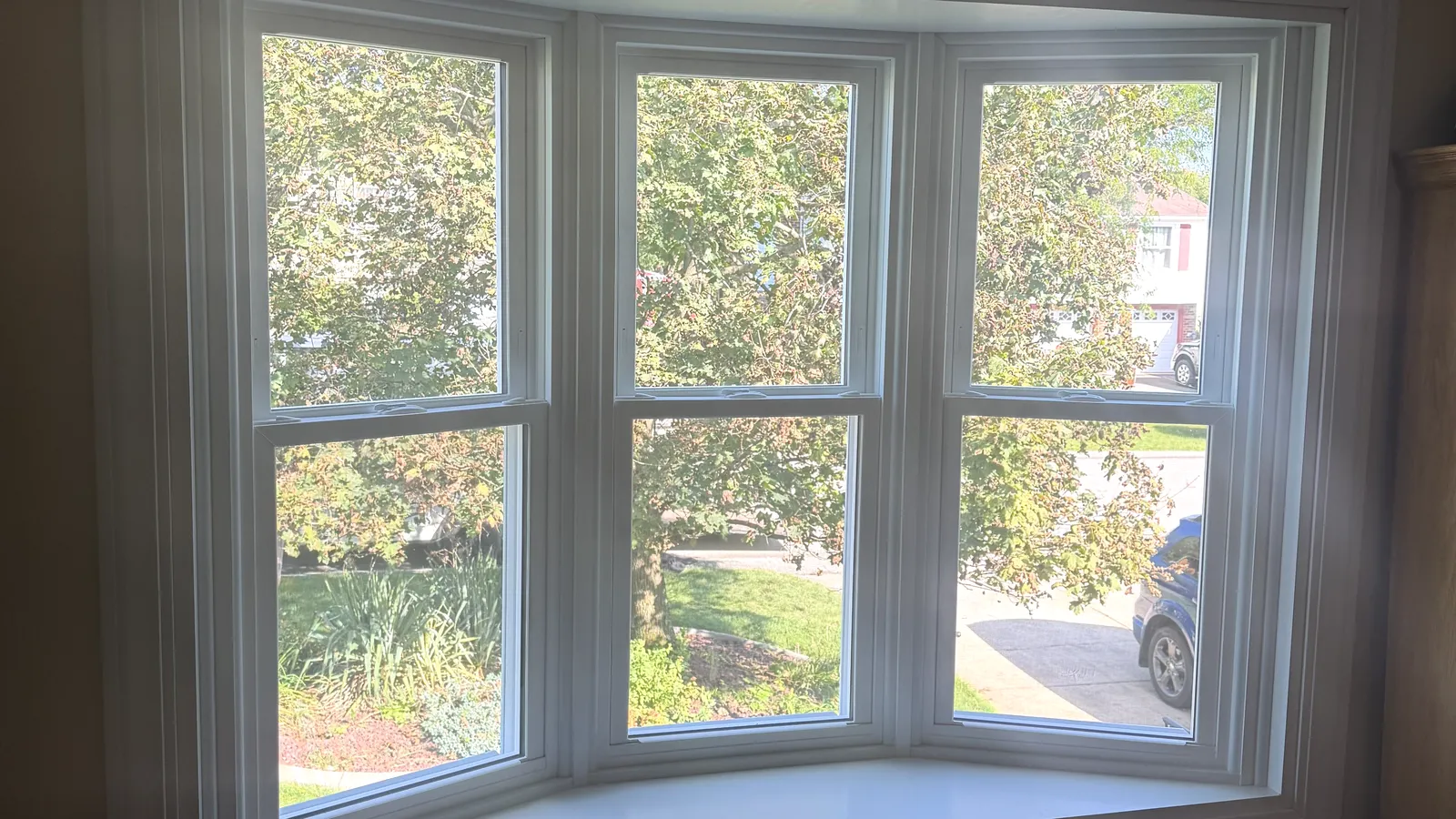
A little condensation on the inside of your windows on a cold morning is normal. It means warm, humid indoor air is touching glass that’s colder than the air’s dew point, and the water comes out of the air, not through the window. It becomes a problem when it’s heavy, when it runs down and soaks the sill, when it freezes into frost on the inside of the glass, or when the fog is between the panes where you can’t wipe it off. That last one means the window’s seal has failed, and no amount of cleaning will fix it.
In Pittsburgh this shows up every year at the same time: the first frosty nights of mid to late October, when the furnace kicks on and the outside temperature drops into the 30s. Here’s how to read what your windows are telling you.
First, find where the moisture is
Where the water sits tells you almost everything.
| Where you see it | What it means | Is it a window problem? |
|---|---|---|
| Inside surface of the glass (you can wipe it off) | Indoor humidity meeting cold glass | Usually not, but heavy or constant condensation points to cold glass or a leaky frame |
| Between the panes (you can’t wipe it off) | The insulated glass seal has failed | Yes. The glass unit has lost its insulating gas and is letting moist air in |
| Outside surface of the glass (morning dew) | Cool glass and humid outdoor air | No. It’s often a sign of an efficient window that keeps heat inside |
| Frost or ice on the inside glass or frame | Glass or frame surface below freezing | Often yes, especially along the frame or bottom edge of the glass |
Why windows sweat once it turns cold
Warm air holds more moisture than cold air. When indoor air hits a surface colder than its dew point, the moisture condenses into water. Your windows are almost always the coldest surface in the room, so that’s where it shows up first.
Two things drive it:
- How much moisture is in the air. Showers, cooking, drying laundry indoors, houseplants, aquariums, a humidifier running too high, and even a family breathing overnight in a closed bedroom all add moisture. A new, tighter house (or a newly air-sealed one) holds on to it longer.
- How cold the glass is. The colder the inside surface of the glass, the less humidity it takes to fog it. Single-pane glass in a Pittsburgh winter can sit close to the outdoor temperature. Older double-pane windows with metal spacers and frames get cold along the edges, which is why condensation usually starts at the bottom corners first.
That’s why the same house that’s dry all summer starts sweating the first week the furnace runs, and why the problem is worst in bedrooms and bathrooms on the north side of the house.
Condensation between the panes: a failed seal
Double- and triple-pane windows are built as sealed units: two or three panes of glass with a spacer around the edge, often filled with argon gas. When that edge seal breaks down from age, sun, or the stress of years of hot summers and freezing winters, moist outdoor air gets into the space between the panes. On a cold morning you’ll see fog, streaks, or a milky haze inside the glass that won’t wipe off from either side.
A failed seal means:
- The insulating gas is gone or going. The window no longer insulates the way it was rated to.
- The fog will come and go, but it won’t go away. It often clears in the afternoon and returns overnight. Over time, mineral deposits leave permanent cloudy stains on the inside surfaces.
- The window is at the end of its life, especially if it’s one of many original units installed at the same time. When one seal fails, others of the same age are usually close behind.
One note on how we handle it: Ireland Contracting doesn’t replace glass units or repair existing windows. When a window has failed, we replace the whole unit, properly installed and sealed into the opening, and we’ll tell you honestly if only one or two windows actually need it.
Frost on the inside of the glass
Frost or ice on the inside of a window means the inside surface of the glass or frame has dropped below freezing. A little at the very bottom edge of an old window on the coldest night of the year isn’t unusual. Regular frost is a stronger signal:
- Single-pane glass or old storm-window combinations simply can’t keep the inside surface warm when it’s in the teens or below outside.
- Aluminum frames conduct cold straight through to the inside, so frost forms on the frame itself.
- Air leaking around the sash chills the glass and frame right where the leak is, so you’ll see frost in a line along a gap.
Frost that melts every afternoon soaks the sill, the drywall below the window, and the wood frame. A few winters of that and you’re looking at peeling paint, mildew, and rot.
How to cut down on interior condensation
If the moisture is on the inside surface and your windows are otherwise in good shape, start here:
- Lower indoor humidity in cold weather. Many university extension services publish the same rule of thumb: the colder it is outside, the lower your indoor humidity should be. When it’s well below freezing, that usually means keeping it somewhere around 30 to 35%, and lower still in a deep cold snap. An inexpensive hygrometer from the hardware store tells you where you are.
- Turn down or turn off the humidifier on a whole-house system when the windows start to sweat.
- Run bath and kitchen exhaust fans during showers and cooking and for 15 to 20 minutes after. Make sure they actually vent outside, not into the attic.
- Open blinds and curtains during the day. Heavy window coverings trap cold air against the glass and hold moisture there.
- Keep air moving. Ceiling fans on low and supply vents that aren’t blocked by furniture help warm the glass.
- Don’t dry laundry indoors and spread out large groups of houseplants away from the windows.
- Wipe up standing water on sills each morning so it doesn’t soak into the wood and drywall.
If those steps don’t help and you’re still wiping down the same windows every morning, the windows themselves are likely the problem.
When condensation means it’s time to replace
Condensation alone isn’t a reason to replace windows. These are:
- Fog or haze between the panes that won’t wipe off from either side
- Frost on the inside glass or frame on ordinary cold nights, not just the worst of the year
- Water that runs off the glass and pools on the sill every morning, with staining, peeling paint, or soft wood underneath
- Mildew or mold on the frame, sill, or wall below the window
- Drafts you can feel near the sash, often in the same windows that sweat the most
- Single-pane glass or windows with aluminum frames
New windows help in two ways. Low-E coatings and argon-filled double- or triple-pane glass keep the inside surface of the glass much warmer, and warm-edge spacers keep the bottom edge from getting cold, which is exactly where condensation starts. And a properly installed window, with the gap between the frame and the wall foamed and flashed, stops the cold air leaks that chill the glass in the first place. Our guide to energy-efficient window options covers the glass and frame choices in more detail.
One thing to expect: very tight new windows can make a house hold its humidity longer. Most homeowners see far less condensation after replacement, but if you run a humidifier hard, you may need to turn it down a notch once the new windows are in.
Why it’s worse in older Pittsburgh homes
Pittsburgh’s housing is old. In Allegheny County, the median home was built in 1957, and about 28% were built before 1940 (U.S. Census Bureau, ACS 5-year estimates). A lot of those homes still have original wood windows behind aluminum storms, or first-generation vinyl replacements from the 1990s whose seals are now failing. Add roughly 80 days a year that cross the freezing mark at Pittsburgh International (NOAA 1991 to 2020 normals), and older windows get a long season of cold glass, condensation, and freeze-thaw on wet sills.
If you’re comparing replacement options for an older house, our vinyl replacement windows guide walks through insert vs. full-frame replacement and what changes in pre-1978 and historic homes. As an Andersen Certified Contractor, we also install the Andersen 100 Series and A-Series.
Can windows be replaced in winter?
Yes. Our crews install year-round and work one opening at a time, so each window is only open for a short time and the rest of the house stays closed up. Replacement windows are built to order, so it usually takes several weeks from measuring to installation. The first frosty mornings are a good time to walk the house and note which windows sweat, fog, or frost the most; that list makes your estimate faster and more accurate.
Seeing fog between the panes or frost on the glass?
Ireland Contracting has installed replacement windows for Western Pennsylvania homeowners since 1994. We’ll look at every window, tell you which ones are just dealing with indoor humidity and which ones have actually failed, and give you a free, itemized estimate.
Call (412) 492-7663 or request a free estimate. See our replacement window services for the full lineup. We serve homeowners across the Greater Pittsburgh area.