
How to Tell If Your Gutters Are Working (and 8 Signs They're Not)
Working gutters carry every drop of roof runoff to a downspout and away from your foundation. Here are 8 signs your gutters are failing, a 5-minute rainstorm check, and when to repair vs. replace in Western PA.
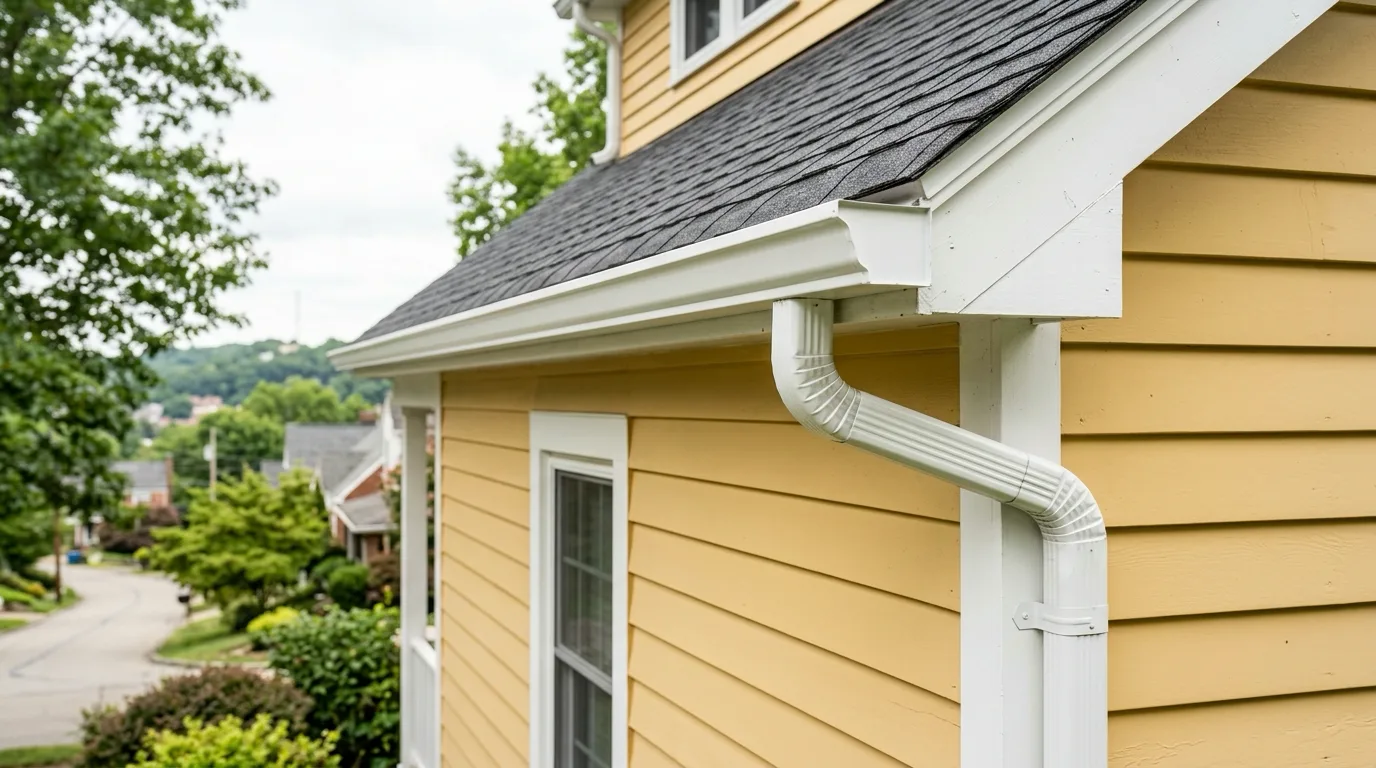
Your gutters are working properly if, during a steady rain, water flows along the gutter toward the downspouts without spilling over the edge, dripping from seams, or pooling in the trough, and the downspouts discharge it well away from your foundation. If you see water sheeting over the front of the gutter, dripping behind it, or collecting against the house, something is wrong, and the cause is usually a clog, a pitch problem, or a gutter that’s starting to pull away.
The tricky part is that gutters fail quietly. Most homeowners only look at them when they’re cleaning them, and by the time the problem is obvious, the damage has moved to the fascia, the siding, or the basement. Here’s what to look for.
8 signs your gutters aren’t working
- Water spilling over the edge during rain. The most common sign, and usually a clog in the gutter or downspout. If the gutter is clean and still overflows, it may be undersized for the roof above it or pitched the wrong way.
- Sagging or pulling away from the house. A gutter that droops between hangers or leans out from the roofline is either overloaded with debris and water or losing its grip on the fascia. Either way, it’s not draining the way it should.
- Water stains, peeling paint, or rot on the fascia. When water gets behind the gutter instead of into it, the fascia board takes the hit. Soft or stained wood along the roof edge is a strong sign the gutter is failing, and often means the fascia needs attention too.
- Drips from seams, corners, and end caps. Sectional gutters have a joint every 10 feet or so, and every joint is a place for sealant to crack and leak. Drips at the same spots every storm mean the seams have failed.
- Standing water in the gutter a day after rain. Gutters should empty completely. Water that sits means the run is flat or sagging in the middle instead of sloping toward the downspout, and standing water rusts, freezes, and adds weight.
- Pooling, erosion, or washed-out mulch near the foundation. Look under the gutter line after a storm. Trenches in the mulch, bare soil, or puddles against the house mean water is coming off the roof somewhere it shouldn’t.
- Damp basement or water stains on foundation walls. A wet basement often starts outside: a short or disconnected downspout dumping roof water right next to the foundation. Check the gutters before assuming the problem is the foundation itself.
- Rust, cracks, or holes. Aluminum gutters don’t rust, but older steel gutters do, and rust spots eventually become holes. Cracks and splits in any gutter mean it’s near the end of its life.
A related one: shingle granules collecting in the gutter. That’s not a gutter problem, it’s a roof one, and it’s worth reading our guide to the signs your roof is leaking if you’re seeing a lot of them.
The 5-minute rainstorm check
The best time to test your gutters is during a steady rain, not on a dry afternoon. Grab an umbrella and walk the perimeter of the house:
- Watch the gutter edges. Any water sheeting over the front lip marks a clog or a low spot.
- Look behind the gutter. Water running down the fascia or siding means it’s getting between the gutter and the house.
- Check every downspout. Each one should be flowing strongly. A downspout that’s barely trickling while the gutter above it overflows is clogged.
- Follow the water at the bottom. Downspouts should discharge several feet away from the foundation, onto a splash block or into an extension, not straight down beside the wall.
- Note the corners. Inside corners collect the most runoff from two roof planes and are the first place undersized gutters overflow.
Then check again the next day. Any gutter still holding water is pitched wrong or sagging.
Don’t climb a ladder in the rain to investigate. Everything above can be seen from the ground.
Why gutters fail in Pittsburgh and Western PA
Pittsburgh-area homes are hard on gutters for a few specific reasons:
- Heavy tree cover. Mature oaks, maples, and pines drop leaves, needles, seed pods, and “helicopters” into gutters nearly year-round, not just in the fall. A gutter that was clean in October can be clogged again by the first big November storm.
- Freeze-thaw cycles. Water left sitting in a clogged or sagging gutter freezes, expands, and loosens hangers and seams. Over a winter, that cycle repeats dozens of times.
- Ice dams. When melting snow can’t drain off the roof, it refreezes at the edge. The weight of ice in a gutter can pull it right off the fascia, and the ice dam behind it can force water up under your shingles.
- Hills and downpours. On sloped lots, water that isn’t carried well away from the house runs back toward it. And a summer downpour can dump more water on a roof in an hour than an undersized gutter can carry.
That’s why fall is the most important time to check your gutters, right before the leaves come down and the first freeze. Our fall roof maintenance checklist covers gutters alongside the rest of the roof edge.
Repair or replace?
Plenty of gutter problems don’t require a new system.
Repair usually makes sense when:
- One or two sections are sagging or have lost their pitch and can be re-hung
- A few seams or end caps are leaking and can be resealed
- Hangers have loosened or failed but the gutter itself is sound
- A downspout is crushed, disconnected, or too short
Replacement is usually the better value when:
- The gutters are rusted through, cracked, or leaking at many joints
- They’re pulling away because the fascia behind them has rotted
- They overflow even when clean, meaning they’re too small for the roof
- You’re replacing the roof anyway, which is the easiest time to replace gutters too
When we replace gutters, we form seamless aluminum gutters on-site to your home’s exact roofline. With no joints along the straight runs, there are far fewer places to leak or separate than with sectional gutters. We size them (5” or 6”) and the downspouts to the roof area that drains into them, and we can add gutter guards if your home sits under heavy tree cover.
One note: we install and repair standard seamless aluminum gutters only. If your home has built-in box gutters recessed into the roof edge, that’s a specialty system and you’ll want a contractor who focuses on it.
How to keep gutters working longer
- Clean them at least twice a year, in late spring and again in late fall after the leaves are down. Homes under heavy tree cover may need it more often.
- Consider gutter guards if you’re cleaning more than twice a year. They don’t eliminate maintenance, but they cut it down significantly.
- Extend your downspouts so water lands several feet from the foundation.
- Trim branches hanging over the roof to reduce what ends up in the gutters.
- Walk the perimeter after big storms and look for sagging runs, loose downspouts, or new drips.
- Fix small problems early. A loose hanger or a leaking seam is a quick repair. The rotted fascia and wet basement it leads to aren’t.
Not sure if your gutters are doing their job?
If you’re seeing any of the signs above, or you just want someone to take a look before winter, Ireland Contracting has repaired and installed gutters for Western Pennsylvania homeowners since 1994. We’ll tell you honestly whether a repair will do or whether it’s time for new gutters.
Call (412) 492-7663 or request a free estimate. See our gutter repair and installation services for more on how we work. We serve homeowners across the Greater Pittsburgh area.