Vinyl vs. Fiber Cement vs. Composite Siding for Pittsburgh Homes
How vinyl, fiber cement (James Hardie), and composite (Everlast) siding compare on durability, upkeep, looks, and what drives the cost, and which one fits which kind of Pittsburgh house.
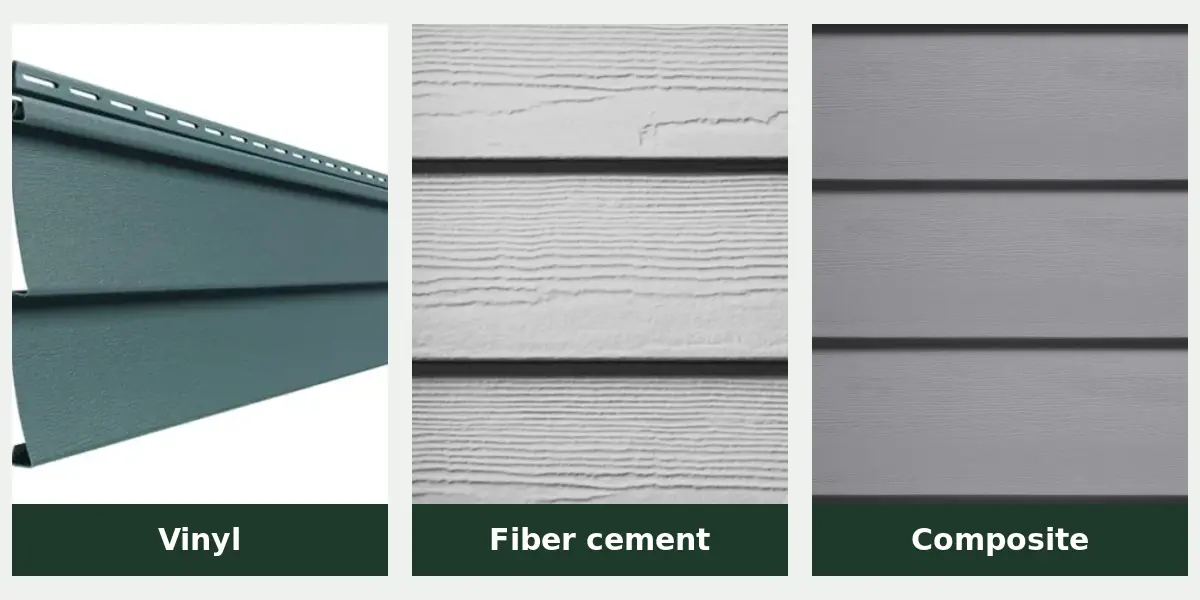
For most Pittsburgh homes, the choice comes down to three kinds of siding. Vinyl is the lightest, needs the least upkeep, and fits the most budgets. Fiber cement, such as James Hardie, is the most durable and the only one that won’t burn, but it’s painted and the finish eventually needs refreshing. Composite, such as Everlast, has the color all the way through, never needs paint, and won’t swell or rot. Fiber cement and composite cost more than vinyl up front and last longer.
We’re a James Hardie Preferred Contractor and an Everlast Master Siding Installer, and we install Mastic and Norandex vinyl too. We sell all three because the right answer depends on the house, not on what we’re trying to move. Here’s how they compare.
Siding comparison at a glance
| Vinyl | Fiber cement | Composite | |
|---|---|---|---|
| What it’s made of | PVC plastic | Cement, sand, and wood fibers | Minerals and polymer resins |
| Typical lifespan | 20–40 years | 50+ years | 30–50 years |
| Painting | Never | Needs repainting eventually | Never; color goes all the way through |
| Moisture and rot | Doesn’t rot; water can get behind loose panels | Resists moisture, rot, and termites | Won’t swell, split, or rot |
| Impact and cold | Builder-grade cracks in the cold; thick panels hold up well | Very hard; resists dents and woodpeckers | Durable mineral-based board |
| Looks | Wide range; thick panels look much better than thin ones | Deep wood grain, crisp edges, paints any color | Embossed from real cedar, factory colors |
| Installation | Light, fastest to install | Heavy; needs trained crews and dust control | Installed to the manufacturer’s spec by a trained crew |
| Relative cost | Lowest | Higher | Higher |
Lifespans are typical ranges for siding installed and maintained correctly. In Western PA’s climate, plan for the lower end. Our post on how long siding lasts in Western PA goes through each material in more detail.
Vinyl siding
Vinyl is the most common siding around Pittsburgh for good reasons: it never needs paint, it’s light, it goes up quickly, and it costs the least of the three. What separates good vinyl from bad is the panel itself.
The pros:
- No painting, ever. Washing once a year is the main upkeep.
- The widest range of profiles: clapboard, Dutch lap, shake, and board and batten.
- Insulated vinyl adds a foam backer that stiffens the panel and cuts heat loss through the wall. It’s a real upgrade on the uninsulated 1950s and 60s homes common in Shaler, Ross, and Bethel Park.
The cons:
- Thin builder-grade vinyl cracks in hard cold, ripples (“oil-cans”) in summer sun, and fades on south and west walls.
- A cracked or loose panel lets wind-driven rain get behind it.
- It melts if a grill or fire gets too close.
What to look for: panel thickness and wind rating. The Mastic Quest we install is a .046-inch panel rated for winds up to 163 mph, and Mastic’s Cedar Discovery shake runs .080 to .100 inch. Panels like these are the reason premium vinyl looks and performs nothing like the thin stuff on many 1990s subdivisions.
Best for: most budgets, homeowners who never want to paint, and houses where insulated vinyl can fix a cold, drafty wall at the same time.
Fiber cement siding (James Hardie)
Fiber cement is made from cement, sand, and wood fibers pressed into planks. James Hardie is the best-known brand, and HardiePlank is what most people mean when they say “Hardie board.”
The pros:
- The most durable siding we install. It handles freeze-thaw cycles, moisture, and UV better than almost anything else, and it’s the one we most often recommend for exposed hilltop and west-facing homes.
- Noncombustible: it will not burn.
- Resists termites and woodpeckers, which make short work of cedar.
- Hardie’s Engineered for Climate formulation is made for regions with our kind of weather.
- A 30-year non-prorated, transferable substrate warranty from James Hardie when it’s installed to Hardie’s specifications.
The cons:
- It’s heavy and has to be cut with dust control, so installation takes trained crews and more time than vinyl.
- It’s painted, either at the factory or on site, and that finish eventually needs repainting. The board itself lasts far longer than the paint.
- It’s one of the two higher-cost options.
Installation matters more with fiber cement than any other siding. Clearances at the roofline and ground, flashing at every window, and the right fasteners are what make the warranty hold. As a James Hardie Preferred Contractor, we install it to Hardie’s specifications for exactly that reason.
Best for: homeowners who want the house done once, older homes where a painted wood look fits the architecture, and exposed walls that take the worst weather.
Composite siding (Everlast)
Everlast, the composite siding we install, is a board made of minerals, polymer resins, and acrylic colorants.
The pros:
- The color goes all the way through the board, so it never needs paint and scratches don’t show a different color underneath.
- It’s virtually water-impermeable: it won’t swell, split, or rot, and insects have nothing to eat.
- Everlast’s CedarTouch finish is embossed from real rough-sawn cedar, so it reads as wood from the street.
- It comes in 7-inch and 4½-inch lap and in vertical board and batten.
The cons:
- You choose from Everlast’s factory colors. If you want a specific custom paint color, fiber cement is the more flexible choice.
- Like fiber cement, it’s one of the two higher-cost options.
Best for: homeowners replacing cedar who want to keep the wood look without the upkeep. Everlast featured one of our Gibsonia projects as a manufacturer case study: tired cedar came off, and 7-inch lap in Chestnut went on.
What drives the cost of each
We don’t publish prices because every house is different, but these are the factors that move a siding estimate, whichever material you pick:
- The material and the panel. Fiber cement and composite cost more than vinyl. Within vinyl, a thick or insulated panel costs more than a thin one.
- The size and shape of the house. Wall area matters, but so do the number of corners, gables, dormers, and stories.
- What has to come off. Stripping aluminum is quick. Old cedar has to be inspected for rot. Asbestos-cement shingle, common on pre-war homes in Mt. Lebanon, Dormont, and Bellevue, has to be removed intact and disposed of properly.
- What’s under it. Rotted sheathing found during tear-off gets repaired before anything new goes on.
- Trim, soffit, and fascia. Most siding jobs include new trim and soffit and fascia, and a house with a lot of trim costs more to finish.
- Windows and doors. Every opening gets flashed. Re-siding is also a good time to replace tired windows, since the trim and flashing only get done once.
We give a free itemized estimate that breaks out the material, trim, and any sheathing allowance, so you can compare options line by line.
Which siding is best for a Pittsburgh house?
Think about the house you have, how long you’ll stay, and how much upkeep you’re willing to do:
- A 1950s or 60s ranch or split-level with old aluminum: insulated vinyl is usually the best value, since it fixes the cold walls and the look at the same time.
- An older home with cedar or a painted wood look worth keeping: fiber cement or composite. Fiber cement if you want to choose any paint color; composite if you never want to paint again.
- A house on a hilltop, or with walls facing west into the weather: fiber cement, the most durable option we install.
- You plan to sell within a few years: a quality vinyl usually makes the most sense.
- You want to do this once and be done: fiber cement or composite.
Whatever you choose, the installation matters as much as the material. We tear off the old siding rather than covering it, repair the sheathing, wrap the walls, and flash every opening before the new siding goes on. Siding installed over a wet, unflashed wall fails early no matter what it’s made of.
Compare all three at your house
We bring samples of all three materials to the house, look at what’s under your current siding, and help you weigh them for your walls, exposure, and budget. See our Pittsburgh siding services for the full product lineup.
Call (412) 492-7663 or request a free estimate. We’re based in Glenshaw and have been working on homes across the Pittsburgh area since 1994.