
Ice Dams on Pittsburgh Roofs: What Causes Them and How to Prevent Them
Why ice dams form at the edge of your roof, how to tell if one is leaking into your house, what to do safely when you see one, and how to stop them for good in a Western PA winter.
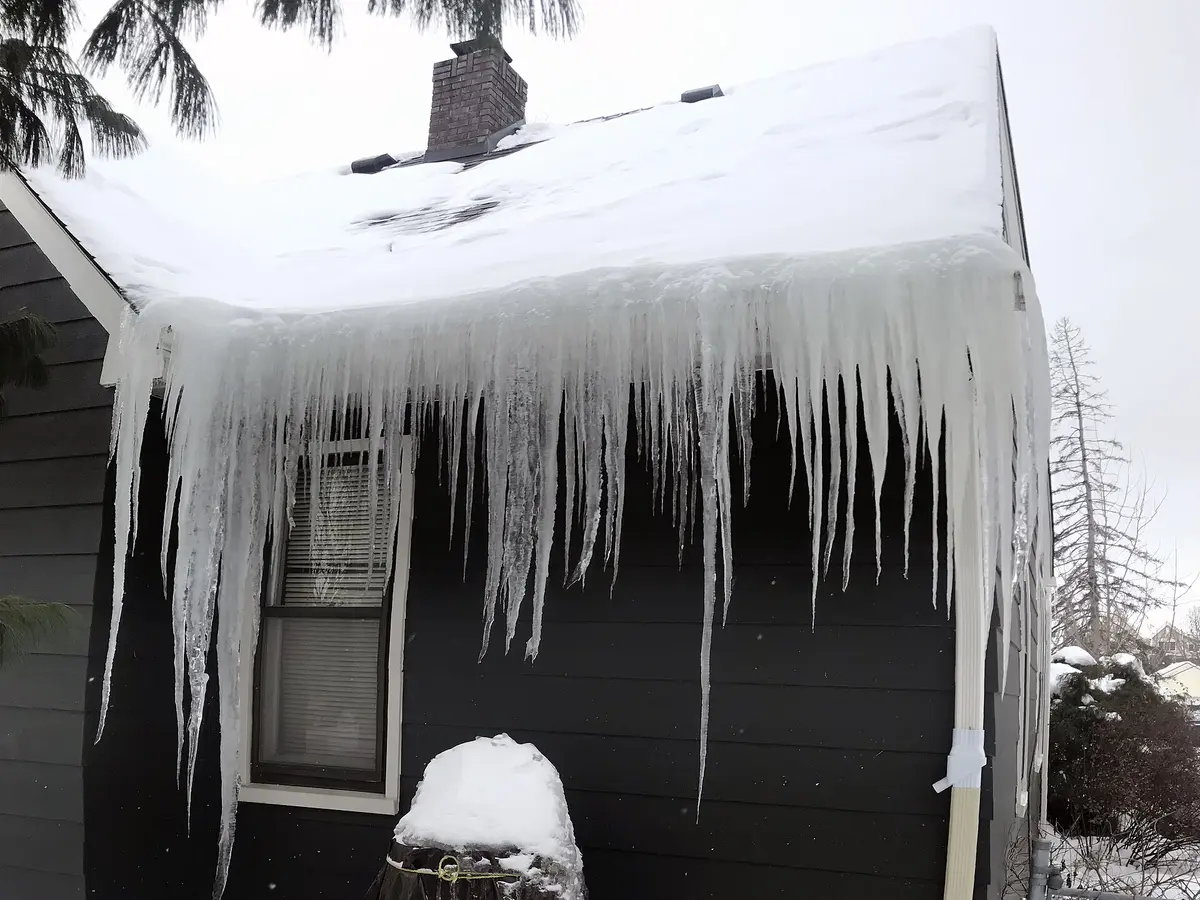
An ice dam is a ridge of ice that builds up along the bottom edge of a roof. It forms when heat escaping from the house melts the snow on the upper part of the roof, the meltwater runs down to the colder overhang, and it freezes again there. Each melt adds to the ridge. Once it’s big enough, new meltwater pools behind it and backs up under the shingles, and that’s when water starts showing up on your ceilings and walls.
Ice dams are not caused by snow or cold alone. They’re caused by a warm roof deck above a cold edge. That’s why two houses on the same street can look completely different after a storm: one has a clean roof edge, and the other has a wall of icicles.
Why Pittsburgh gets so many ice dams
Western Pennsylvania winters rarely stay frozen. A typical January here swings above and below freezing again and again, which means snow on a roof melts and refreezes many times instead of sitting until spring. Every one of those cycles is a chance for an ice dam to grow.
Our housing stock makes it worse. Many homes around Pittsburgh were built before anyone thought much about attic air sealing:
- Story-and-a-half homes and Cape Cods. The finished rooms upstairs sit right under the roof, with short knee walls and sloped ceilings that are hard to insulate. Heat from those rooms goes straight into the roof deck, and ice dams along the eaves are almost a given.
- 1950s and 60s ranches and split-levels. Common in the North Hills and South Hills, these often have thin insulation and too little attic ventilation for the size of the roof.
- Older brick homes. Plaster ceilings, old light fixtures, chimney chases, and attic hatches leak warm air into the attic in ways you can’t see from below.
What causes an ice dam
Three things have to happen together:
- Snow on the roof. Without snow there’s nothing to melt.
- A warm upper roof. Heat from the living space gets into the attic and warms the underside of the roof deck above freezing, even when it’s well below freezing outside.
- A cold roof edge. The overhang sticks out past the walls of the house, so no heat reaches it. Meltwater that runs down to it freezes.
Where the attic heat comes from is the important part. It’s usually some mix of:
- Air leaks from the house into the attic. Gaps around recessed lights, plumbing and wiring holes, the attic hatch, and the top of interior walls let warm, moist air rise into the attic. This is usually the biggest single source.
- Not enough insulation. Thin or matted insulation lets heat pass straight through the ceiling.
- Poor attic ventilation. A ventilated attic pulls in cold outside air at the soffits and lets warm air out at the ridge, keeping the roof deck close to the outdoor temperature. Blocked soffit vents or an attic with no ridge or roof vents trap the heat instead.
- Things that vent into the attic. A bath fan or dryer that dumps warm, wet air into the attic instead of outside adds heat and moisture right where you don’t want it.
Do clogged gutters cause ice dams?
Clogged gutters don’t start ice dams on their own, but they make them worse. Ice that fills a gutter gives the dam a head start at the edge of the roof, and the weight can pull the gutter off the fascia. Clean gutters before winter, but don’t count on clean gutters alone to prevent ice dams on a house that’s losing heat into the attic. Our guide to signs your gutters aren’t working covers what to look for.
Are icicles a sign of an ice dam?
Not always, but big ones are a warning. A few small icicles hanging from a gutter on a sunny day are normal. Thick icicles along most of the eave, especially ones that keep growing during cold, cloudy weeks, mean water is regularly melting and refreezing at the edge of your roof. Check for these too:
- A ridge of ice sitting on the shingles just above the gutter
- Icicles hanging from the soffit or coming out from behind the gutter
- Water stains or peeling paint on ceilings and walls along the outside walls of the house, often on the top floor
- Damp or frosty insulation, or wet roof boards, near the eaves in the attic
- Water running down the inside of a window frame or an exterior wall
If you’re seeing water inside, our post on how to tell if your roof is leaking walks through where to look and what to do next.
What to do if you have an ice dam right now
Start with safety. A roof covered in snow and ice is the most dangerous roof there is, and ice dams form at the edge, which is the easiest place to fall from.
- Stay off the roof and off a ladder against the gutter. Leave anything that needs climbing to someone with the right equipment.
- Don’t chip or hammer at the ice. It’s easy to break shingles, crack the gutters, or puncture the roof.
- Rake the snow off the lower few feet of the roof from the ground with a long-handled roof rake. Less snow above the dam means less meltwater feeding it. Work carefully and stay clear of falling snow and ice.
- Don’t use rock salt on the roof. It can damage the shingles, the gutters, and the plants below.
- If water is coming in, put down towels and buckets, move what you can out of the way, and take photos of the stains and the ice outside with the date. Then call a roofer.
During business hours our crew can usually be out the same day to look at an active leak and secure the area. We don’t run an after-hours crew, so if water shows up overnight or on a weekend, call first thing in the morning and we’ll put you ahead of routine work.
How to prevent ice dams for good
Heat cables and roof raking treat the symptoms. The lasting fix is a cold roof deck, so the snow melts evenly from the sun instead of from the house underneath it.
Seal the attic floor
Sealing the gaps between your living space and the attic usually does more than any other single step. That means air-sealing around light fixtures, pipes, wiring, chimney chases, and the attic hatch. It’s often worth having this done before adding insulation, because insulation alone doesn’t stop air from moving through it.
Add insulation where it’s thin
Once the air leaks are sealed, bring the attic insulation up to a level that matches a Western PA climate. Pay extra attention to the edges of the attic and the knee walls in a story-and-a-half house, where the insulation is usually thinnest and the heat loss is right at the roof edge.
Fix the attic ventilation
The attic needs both intake at the soffits and exhaust near the ridge, in balance, so cold air moves along the underside of the roof deck. If the soffit vents are painted over, blocked by insulation, or missing, the attic can’t breathe no matter how many roof vents you add. When we replace a roof, ventilation is calculated for the attic, not just swapped out for the same vents. Damaged or unvented soffits can be replaced as part of soffit and fascia work.
Route fans and vents outside
Make sure bathroom fans, kitchen fans, and the dryer vent all carry air all the way outside, not into the attic.
Protect the roof edge when it’s time for a new roof
A new roof is the time to add protection at the eaves. On every roof replacement we install ice-and-water shield, a self-sealing membrane under the shingles, along the eaves and well past the interior wall line, where ice dams back water up. It doesn’t stop an ice dam from forming, but it keeps backed-up water from getting into the house. Our Pittsburgh roofing page explains what goes into every replacement.
What about heat cables?
Heat cables laid in a zigzag along the roof edge can melt channels through the ice so water can drain. They can help on a problem spot you can’t fix any other way, like a low-slope section over a heated room. But they use electricity all winter, they don’t fix the heat loss that causes the dam, and a poorly installed cable can damage shingles. We treat them as a last resort, not a first step.
Does homeowners insurance cover ice dam damage?
It depends on your policy. Many homeowners policies cover sudden water damage inside the house caused by an ice dam, such as stained ceilings, wet drywall, and damaged insulation. Most don’t cover removing the ice itself, and they may not cover damage an insurer considers the result of long-term wear or neglected maintenance. Read your policy or call your agent, and take dated photos of the ice and any interior damage before anything is cleaned up. If you file a claim, we can document the roof damage for your adjuster.
When to call a roofer
Call if you see water inside, if ice dams come back on the same section every winter, or if the roof, gutters, or soffit were damaged by the weight of ice. Once the snow melts, spring is a good time for an inspection. We check the roof, the flashing, the gutters, and the soffits, and we go into the attic to look at the insulation and ventilation, since that’s usually where the problem starts. If the roof itself is in good shape, a roof repair and some attic work may be all you need. If it’s near the end of its life, our guide to how long a roof lasts in Western PA can help you decide whether to repair or replace it.
For the rest of your pre-winter checklist, see our fall roof maintenance tips.
Call (412) 492-7663 or request a free inspection. We’re based in Glenshaw and have been working on roofs across the Pittsburgh area since 1994.