
How to Tell If Your Roof Has Storm Damage: Wind and Hail Signs to Check
What wind and hail damage look like on a shingle roof, what you can check safely from the ground and the attic, and when to call for a free storm damage inspection in Pittsburgh.
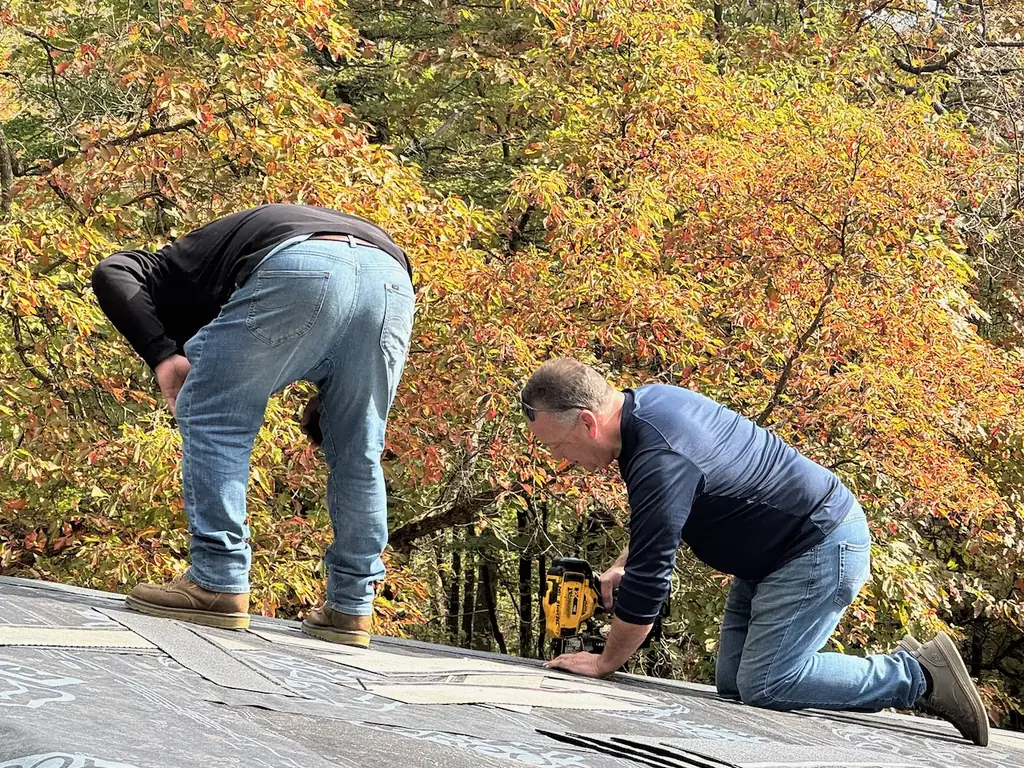
After a strong storm, the quickest way to tell if your roof was damaged is to look for four things: shingles or pieces of shingle in the yard, bare or dark patches on the roof, dents in your gutters and downspouts, and a heavy wash of shingle granules at the bottom of the downspouts. Inside, check the ceilings on the top floor and the attic for fresh water stains or damp insulation. Any one of those is enough reason to have the roof looked at, even if nothing is leaking yet.
Most storm damage doesn’t leak on day one. A gust that lifts a shingle breaks its seal, and the next wind-driven rain gets under it. Hail knocks the protective granules off and leaves the asphalt exposed to sun and freeze-thaw for the rest of the winter. That’s why the first few weeks after a storm are the time to check, not the day the ceiling stain shows up.
Stay off the roof
A wet or storm-damaged roof is slick, and loose shingles slide under your feet. Everything below can be checked from the ground with a pair of binoculars, from a window that looks onto the roof, or from the attic. Leave the climbing to someone with fall protection.
Signs of wind damage
Wind is the most common kind of storm damage we see around Pittsburgh. Straight-line winds from summer thunderstorms and the hard gusts that come with fall and winter fronts both work on the edges of a roof first.
- Missing shingles. Look for shingles or tabs in the yard, in the gutters, or on the driveway, and for patches where the darker underlayment or the wood decking shows through.
- Creased or lifted shingles. A shingle that flapped in the wind but stayed on often has a straight horizontal crease across it, just below the row above. From the ground it can look like a faint line or a shingle that doesn’t lie flat. Creased shingles have lost their seal and are the next ones to go.
- Damage at the edges and ridge. The rakes (the sloped edges), the eaves, and the ridge cap take the most wind. Check those lines for gaps, raised edges, or missing cap pieces.
- Loose flashing. Metal flashing around the chimney, vent pipes, and skylights can bend or pull away. A gap there is a direct path for water.
- Fallen limbs. Even a branch that bounced off can crack shingles or puncture the decking. If a limb is still on the roof, don’t pull it off yourself.
Signs of hail damage
Hail damage is harder to see from the ground, which is why it gets missed and why claims get disputed.
- Dents in metal parts. Gutters, downspouts, vent caps, and the metal on window wraps show hail first. If those are dented, the shingles above them took hits too.
- Granules collecting below the downspouts. Some granule loss is normal on an older roof. A sudden pile of sand-like granules right after a hailstorm is not.
- Dark spots on the shingles. Hail knocks granules loose in round spots. On the roof those spots look darker than the shingle around them, and up close the asphalt underneath feels soft or bruised.
- Marks on siding, decks, and outdoor furniture. Chips in siding, dents in a grill lid, or torn window screens all tell you the hail was large enough to matter.
Check inside, too
Go into the attic during the day, ideally after the next rain. Look for daylight through the roof boards, wet or matted insulation, and dark streaks on the rafters. Then check the top-floor ceilings, especially around light fixtures, closets, and outside walls. Water rarely shows up directly under the hole. It runs along a rafter or the underlayment first, so a stain can be several feet from the damage. Our post on the signs of a leaking roof walks through each of these in more detail.
Don’t forget the gutters, siding, and trim
A storm that damages a roof usually leaves marks below it. Bent or sagging gutters can pull the fascia board with them, and torn soffit lets wind-driven rain and animals into the eaves. Cracked or loose siding panels are worth noting too, since they are part of the same storm event. If you’re not sure whether your gutters are still doing their job, see signs your gutters aren’t working.
Take pictures before anything is cleaned up
Before you rake up shingle pieces or toss a bent downspout, photograph them where they landed, with the date. Take wide shots of each side of the house and close-ups of any damage you can see. If you end up filing an insurance claim, those photos are the start of the record.
What to do if you find something
If water is coming in, put a bucket under it, move what you can out of the way, and call us. During business hours our crew can usually be out the same day to tarp and secure the roof. We don’t run an after-hours crew, so if a storm hits overnight or on a weekend, call first thing in the morning and we’ll put you ahead of routine work.
If nothing is leaking but you saw some of the signs above, schedule a free inspection. We check the whole exterior, not just the spot you called about: the roof, flashing, gutters, siding, and soffit and fascia. We photograph everything we find, and if you file a claim we can meet your adjuster on the roof to point out the damage. Our Pittsburgh storm damage repair page covers how the insurance side works, including when a storm means a repair and when it means a new roof.
Not every problem after a storm was caused by it. If the inspection shows wear that has nothing to do with the weather, we’ll tell you that too, and a small fix may be all you need from our roof repair team.
Call (412) 492-7663 or request a free inspection. We’re based in Glenshaw and have been working on roofs across the Pittsburgh area since 1994.